
◈ ADVANCED RULES
Lightspeed Actions
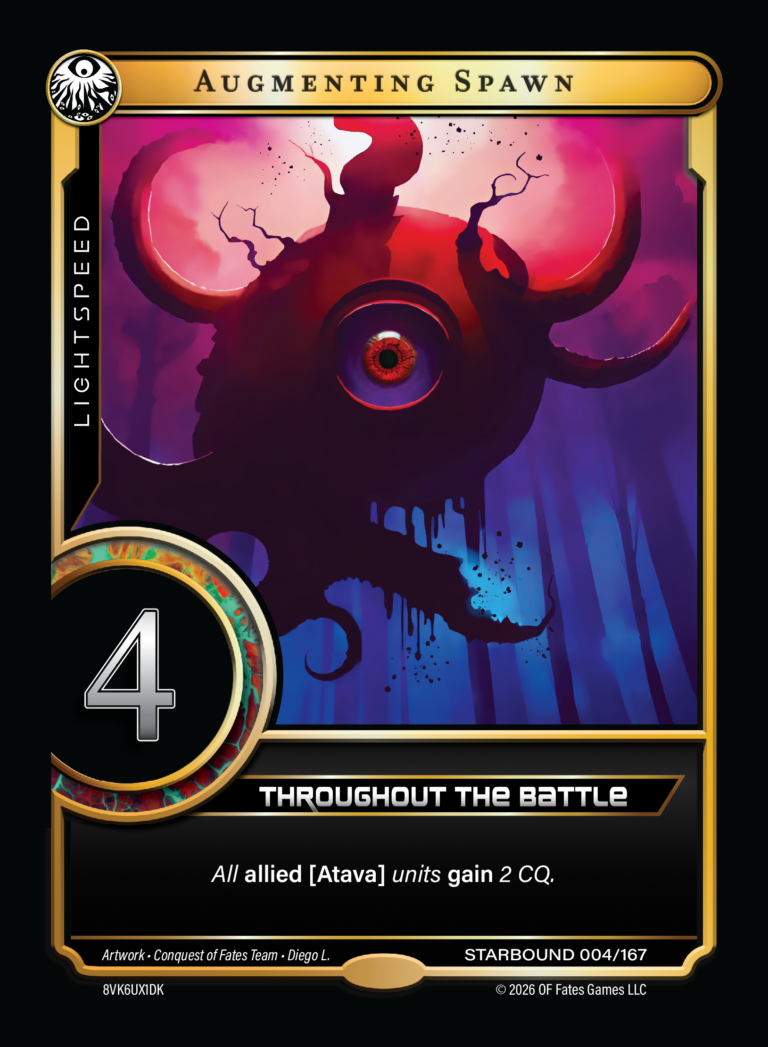
When your opponent makes a move, you can answer it on the spot with a gold-bordered Lightspeed card. Your opponent can then answer you back.
Everyone keeps answering until no one wants to. Then it all resolves.
The last card played resolves first.
Then you work backwards to the first — last in, first out.
PLAYED
1A→
2B→
3C
RESOLVES
3C→
2B→
1A
AN EXAMPLE
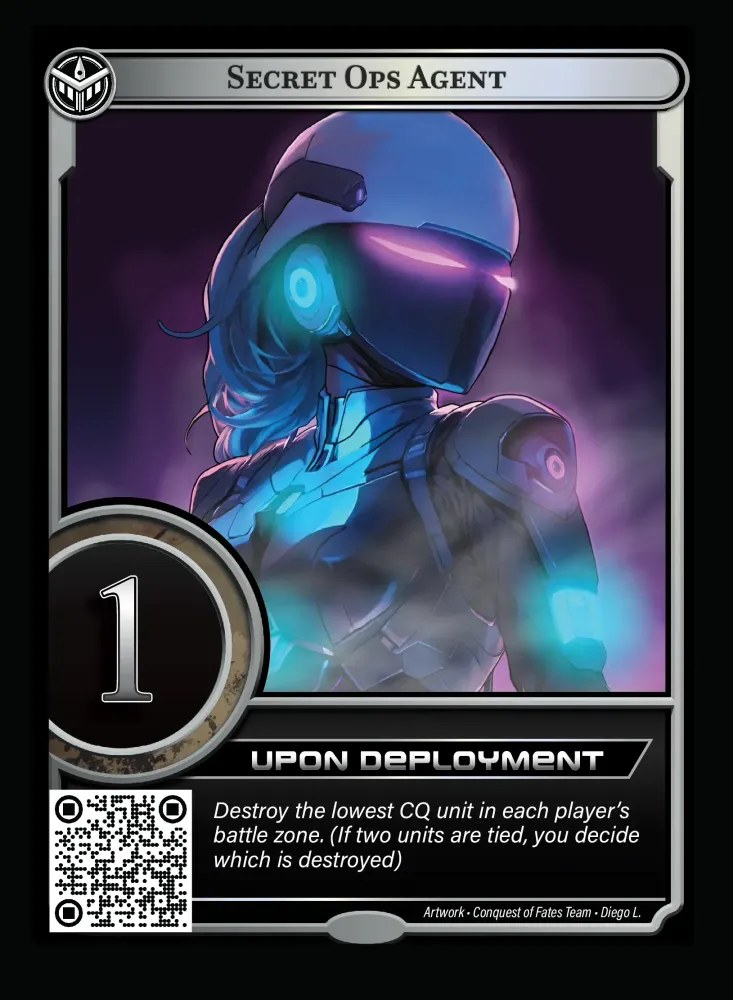
1 · PLAYER 1 PLAYS
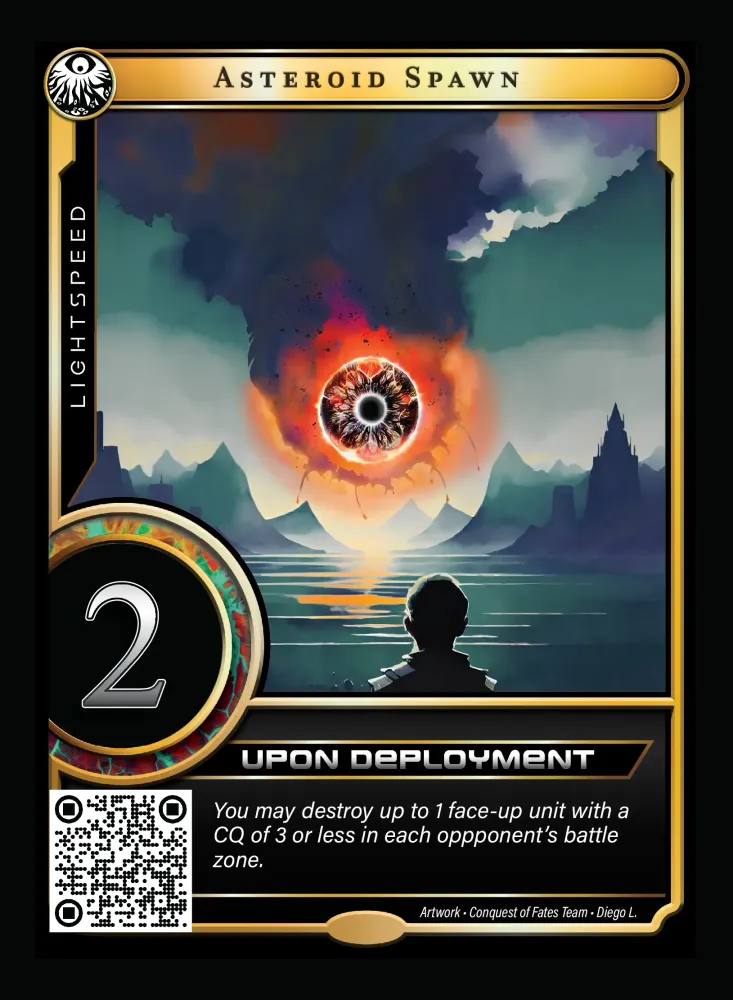
2 · PLAYER 2 ANSWERS
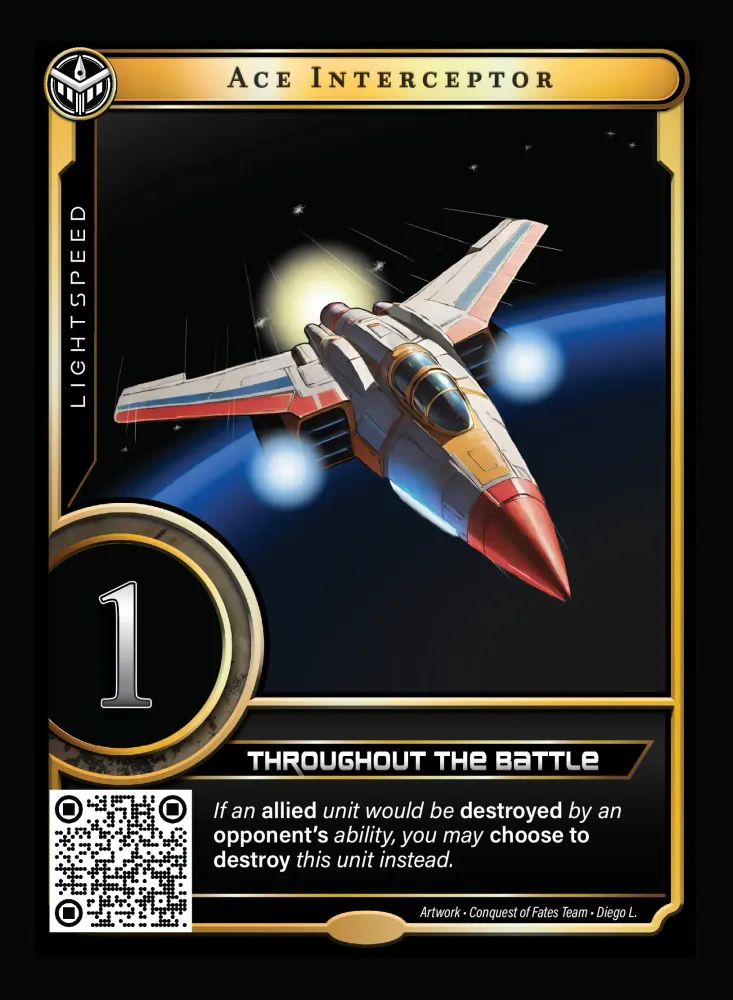
3 · PLAYER 1 ANSWERS
NOW IT RESOLVES BACKWARDS — LAST PLAYED FIRST
1
Ace Interceptor (played last) deploys first, and its effect takes hold.
2
Asteroid Spawn tries to destroy Secret Ops Agent — but Ace Interceptor takes the hit instead and is destroyed.
3
Secret Ops Agent was never destroyed, so it stays — and its ability happens.
Ace Interceptor took the hit for its teammate. Secret Ops Agent survives.